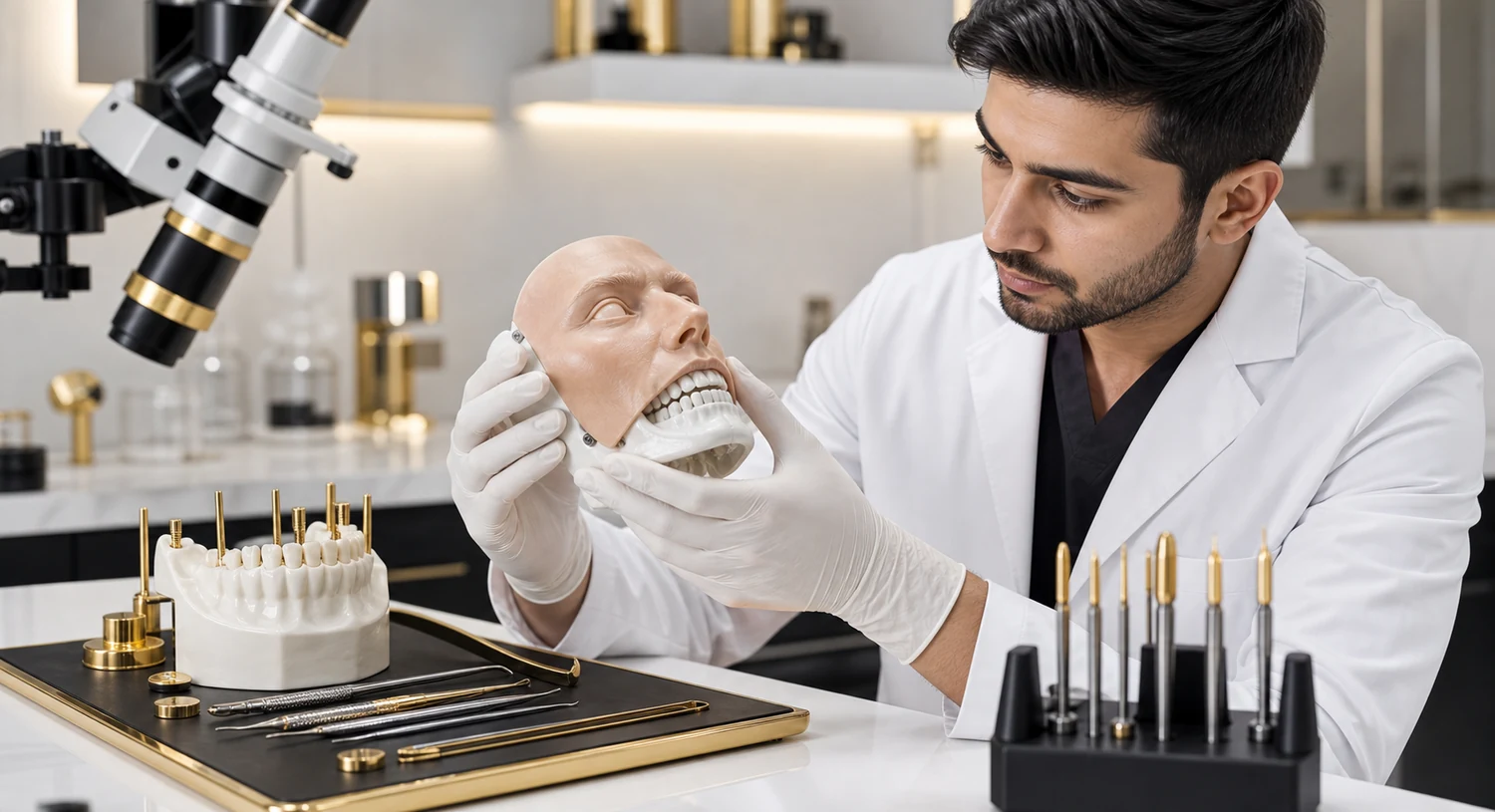
One term covers several specialised prostheses
Maxillofacial prostheses are designed around the structure that needs rehabilitation. Names describe the area involved, but no category alone determines treatment. Specialist assessment is required because anatomy, healing, tissue condition and functional needs vary.
Obturator prosthesis
An obturator is an intraoral prosthesis that may help close an opening involving the palate or nearby structures after certain operations or conditions. Depending on the situation, it may support separation of spaces, speech, swallowing or chewing. Designs can change during healing.
Ocular and orbital prostheses
An ocular prosthesis relates to the eye socket after loss of an eye, while an orbital prosthesis may replace a wider eye-region structure. The appropriate pathway depends on remaining tissues and specialist evaluation. Appearance, comfort, hygiene and retention are planned carefully.
Auricular and nasal prostheses
An auricular prosthesis replaces part or all of an external ear. A nasal prosthesis replaces part or all of the nose. Shape, colour, margins and retention need individual planning, and maintenance may change as tissues or materials change.
Facial prostheses
A facial prosthesis may restore a larger or combined facial area after surgery, trauma or another condition. Planning may require coordination with the wider medical team and a realistic discussion about camouflage, retention and daily use.
Other intraoral rehabilitation
Jaw defects and loss of oral structures may require specialised dentures or other prosthetic designs. Remaining teeth, tissues, opening, bite and cleaning ability influence the plan.
Why assessment matters
Two people with a similarly named condition may need different prostheses. Timing, goals and materials are chosen only after reviewing the actual situation. Begin with our guide, What Is a Maxillofacial Prosthesis?, then explore Dentoveda's prosthetic rehabilitation services in Delhi.
This article provides general dental information and is not a diagnosis or a substitute for examination by an appropriately qualified professional. Treatment recommendations and outcomes depend on individual clinical findings and medical history.